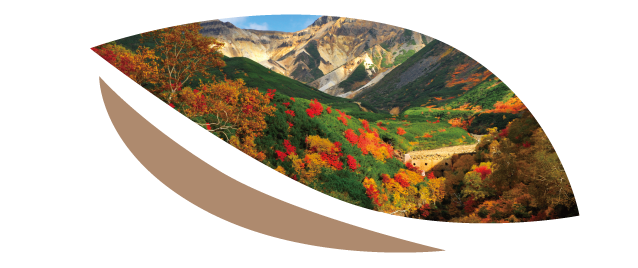

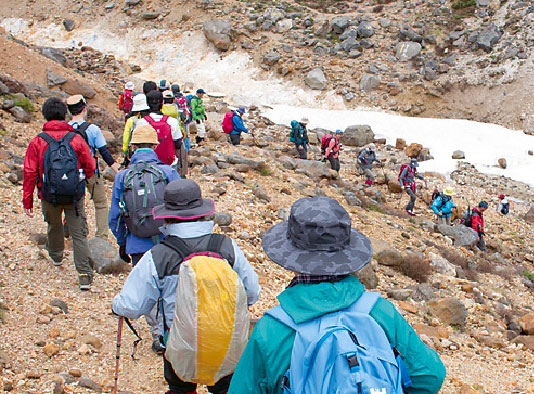






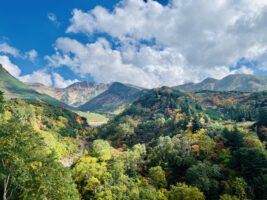


Mt. Tokachidake is the highest peak on the Tokachi mountain range that occupies the southern section of Daisetu-Zan National Park. It is an active volcano known to have caused particularly destructive disasters in the past. One of the many eruptions of the modern era that led to a huge disaster was the "Taisho Eruption" of 1926.
The eruption occurred in May when snow still remained in many areas. The blast caused a section of the mountain to collapse, and the heat of the crumbled earth and sand melted the accumulated snow, creating a volcanic mudflow. The mudflow, engulfing rocks and trees along the way, reached the towns of Biei and Kamifurano downstream, where it swallowed the people, livestock, and houses at the foot of the mountain instantaneously. The most recent eruption was in 1988.
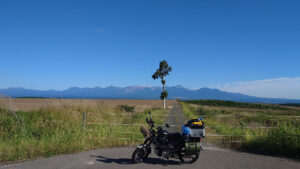
The peaks of the Tokachi mountain range can be seen from Bogakudai mountain. Mt. Furanodake, Mt. Kami-Horokamettoku, Mt. Sanpo, Mt. Nokogiridake, Mt. Bieidake, and Mt. Biei Fuji are all over 2,000 meters in height. It is a most breathtaking sight. The mountains of Daisetsu-Zan can also be seen from the summit.
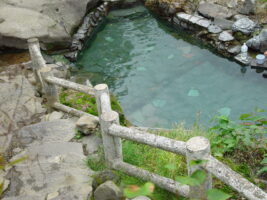
The Mt. Tokachidake Onsen is located at an altitude of 1,280 meters on the west side of the mountain, the highest hot spring in Hokkaido. The open-air hot spring looks out to a crater from which a white column of smoke can still be seen rising from the reddish-brown rocks.
Mt. Kami-Horokamettoku and Mt. Tokachidake stand in the rear. Kitakitsune foxes that live in these mountains are sometimes spotted in this hot spring district. Various alpine plants can be seen growing in colonies at an altitude of over 1,500 meters. The seasonal features of the natural environment is certainly invigorating, both mentally and physically.